Car Insurance Quotes: How to Compare, Save and Choose the Right Policy
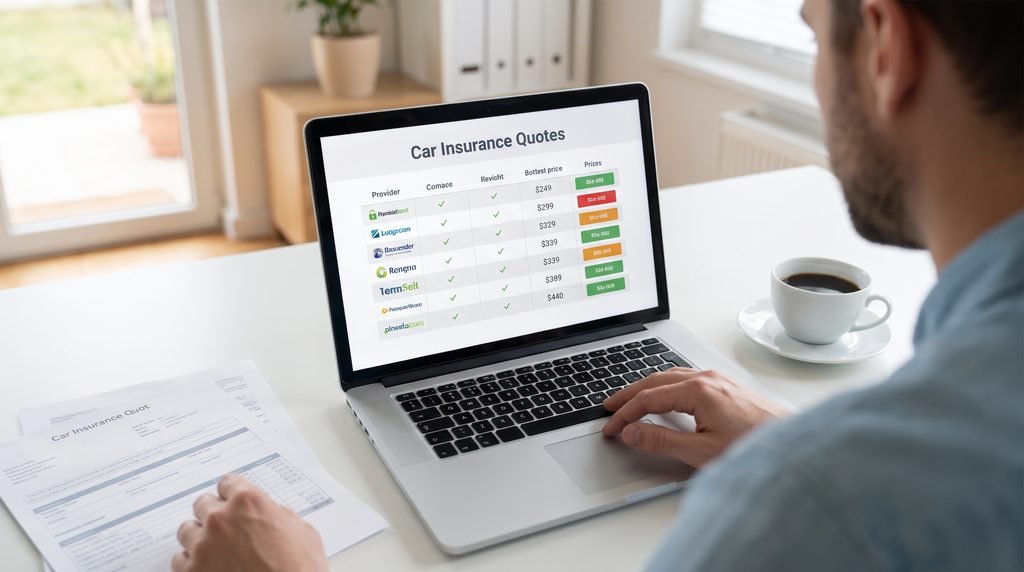
Get free car insurance quotes in minutes. Learn what affects your rate, how to compare quotes side by side and proven ways to lower your premium.
Getting car insurance quotes takes about ten minutes and can save you hundreds of dollars a year, yet most drivers renew with the same insurer without ever comparing. Rates for the exact same driver and car can differ widely from one company to the next, because every insurer weighs risk in its own way.
This guide explains what a car insurance quote is, how to get free quotes online or through an agent, what affects the price, and how to compare offers so you are judging coverage rather than just the monthly number. You will also find practical tips for lowering your premium and a short FAQ at the end.
What is a car insurance quote?
A car insurance quote is an estimate of what an insurer would charge you for a specific policy. It is based on the details you provide about yourself, your vehicle and the coverage you want. A quote is not a binding contract. It becomes a policy only when you accept it, pay the first premium and the insurer confirms cover.
A complete quote usually shows:
- Premium: the price per month, six months or year
- Coverage types and limits: such as liability, collision and comprehensive
- Deductibles: the amount you pay before the insurer pays a claim
- Add-ons: roadside assistance, rental car cover, gap insurance and similar extras
- Discounts applied: safe driver, bundling, low mileage and others
Because quotes are based on your answers, they can change if the insurer later finds that something you entered was incomplete or wrong. Accurate information up front gives you a quote you can rely on.
How to get car insurance quotes
You can request quotes in three main ways. Whichever you choose, ask for the same coverage levels and deductibles each time so the results are comparable.
- Use an online comparison tool. Enter your details once and receive several quotes at the same time. This is the fastest way to see the market, though some sites only show insurers that pay them a referral fee.
- Go direct to insurers. Visit the websites of two or three companies you are considering. Direct quotes often show every discount available and let you customize coverage in detail.
- Talk to an agent or broker. An independent agent can quote several companies for you and explain the fine print. This helps if your situation is complicated, such as a young driver, a past claim or a modified car.
For the best picture, collect at least three to five quotes. Quotes are typically valid for 30 days or less, so request them close together and compare them within the same week.
What you need before requesting a quote
Having these details ready makes the process faster and the quote more accurate:
- Your full name, date of birth and home address
- Driver’s license number and the year you were first licensed
- Vehicle identification number (VIN), make, model and year
- Estimated annual mileage and what the car is mainly used for (commuting, business or leisure)
- Where the car is parked overnight
- Your driving history, including accidents, claims and violations from the past three to five years
- Details of your current policy, including its expiry date and your current coverage limits
- Information about any other drivers in your household who will use the car
Factors that affect your car insurance quote
Insurers use dozens of rating factors. The table below covers the ones that matter most, along with how much control you have over each.
| Factor | Why it matters | Can you influence it? |
|---|---|---|
| Driving record | Accidents and violations signal higher risk | Yes, over time |
| Age and experience | Younger and newer drivers statistically claim more | Not directly |
| Vehicle type | Repair cost, safety rating and theft risk all count | Yes, when choosing a car |
| Location | Traffic density, crime and weather affect claim frequency | Only by moving |
| Annual mileage | More time on the road means more exposure | Yes |
| Coverage and deductible | Higher cover costs more; a higher deductible lowers the premium | Yes |
| Credit-based insurance score | Used by insurers in many regions, though some restrict it by law | Yes, over time |
| Claims history | Past claims can raise your rate at renewal | Yes, over time |
Rules differ by country and region. Some places ban or limit the use of factors such as credit history or gender, so ask the insurer which factors apply to you.
How to compare car insurance quotes
The cheapest quote is not always the best value. Compare these items side by side before you decide:
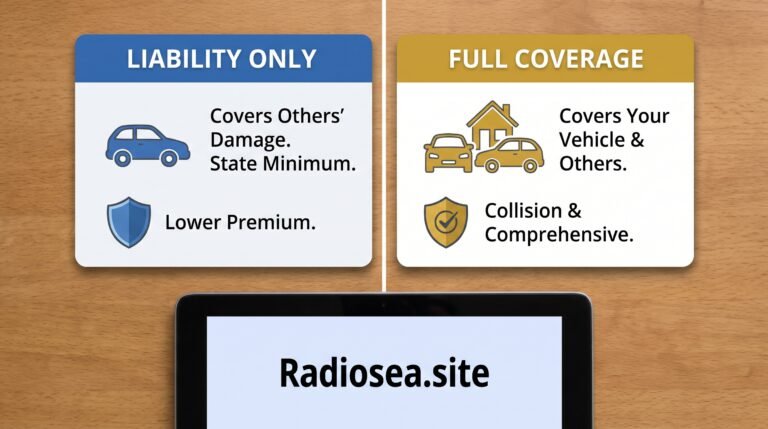
- Coverage types: confirm each quote includes the same mix of liability, collision, comprehensive and any uninsured-driver protection.
- Liability limits: higher limits protect your savings if you cause a serious accident. Minimum legal limits are often too low.
- Deductibles: a lower premium with a very high deductible can cost more when you actually claim.
- Exclusions and fine print: check what is not covered, such as certain drivers, uses or modifications.
- Add-ons: price roadside assistance, rental car and gap cover separately so you can see the true cost.
- Claims reputation: look at customer reviews, complaint ratios and independent satisfaction ratings.
- Payment terms: compare the cost of paying monthly versus paying in full, since installment fees can add up.
A simple method is to put each quote in a spreadsheet with the same columns: premium, deductible, liability limits, extras and any fees. The comparison becomes clear quickly.
Ways to get cheaper car insurance quotes
These steps can lower the quotes you receive without cutting the protection you need:
- Shop around every year. Insurers adjust their pricing often, and loyalty rarely earns the best rate.
- Ask about discounts. Common ones include safe driver, multi-policy bundling, multi-car, good student, low mileage, paid-in-full and anti-theft devices.
- Raise your deductible. Choose an amount you could comfortably pay from savings.
- Keep a clean driving record. Avoiding claims and violations is the biggest long-term saver.
- Improve your credit profile where credit is a rating factor in your region.
- Consider usage-based insurance. Telematics programs reward careful driving with lower rates.
- Drop unneeded cover on older cars. On a low-value vehicle, collision and comprehensive may cost more than they are worth.
- Choose your car carefully. Models with high safety ratings and low repair costs are usually cheaper to insure.
Common mistakes when comparing quotes
- Comparing different coverage. A low quote with lower limits or a higher deductible is not a like-for-like offer.
- Choosing on price alone. A cheap insurer with a poor claims record can cost far more when you need it.
- Entering inaccurate details. Understating mileage or leaving out a driver can lead to a denied claim or a cancelled policy.
- Ignoring the renewal price. Some insurers offer a low first-term rate and raise it sharply at renewal.
- Letting a quote expire. Prices change, so confirm the rate before you cancel your existing policy.
- Cancelling too early. Arrange the new policy to start before the old one ends, so you are never uninsured, and check for cancellation fees.
Car insurance quotes FAQ
Are car insurance quotes free?
Yes. Reputable insurers and comparison sites do not charge for quotes, and requesting one does not commit you to buy.
Does getting a car insurance quote affect my credit score?
No. Insurers typically use a soft credit check, which does not lower your credit score. Quotes are different from loan applications.
How many car insurance quotes should I get?
Aim for at least three to five. This gives you a realistic view of the price range for your profile.
How long is a car insurance quote valid?
Validity varies by insurer, but it is often around 30 days. Check the expiry date on each quote.
Why are my quotes so different from one insurer to another?
Each company uses its own pricing model, claims data and discount rules, so the same driver can receive very different prices.
Is it cheaper to get a quote online or through an agent?
The base price is often similar. The difference comes from the discounts and coverage options each channel surfaces, so it is worth checking both.
How often should I compare car insurance quotes?
Once a year at renewal, and again after a major change such as moving, buying a new car, getting married or adding a driver.
Conclusion
Comparing car insurance quotes is one of the simplest ways to cut a major household expense. Gather your details, request at least three to five quotes for identical coverage, and weigh price against limits, deductibles and the insurer’s claims record. Repeat the exercise every year at renewal.
Ready to find a better rate? Start by requesting free quotes from a comparison site and one or two insurers directly, then choose the policy that protects you best for the price.


4 Comments