Full Coverage vs Liability Car Insurance: What’s the Difference?
| Full coverage or liability only? Compare what each car insurance option covers, what it costs and how to choose the right one for your car. |
Full coverage costs more than liability-only insurance, but it protects far more. The right choice depends on what your car is worth, how you pay for it and how much risk you can afford to carry yourself.
This guide explains what each option covers, compares them side by side and helps you decide which one fits your situation.
What liability insurance covers
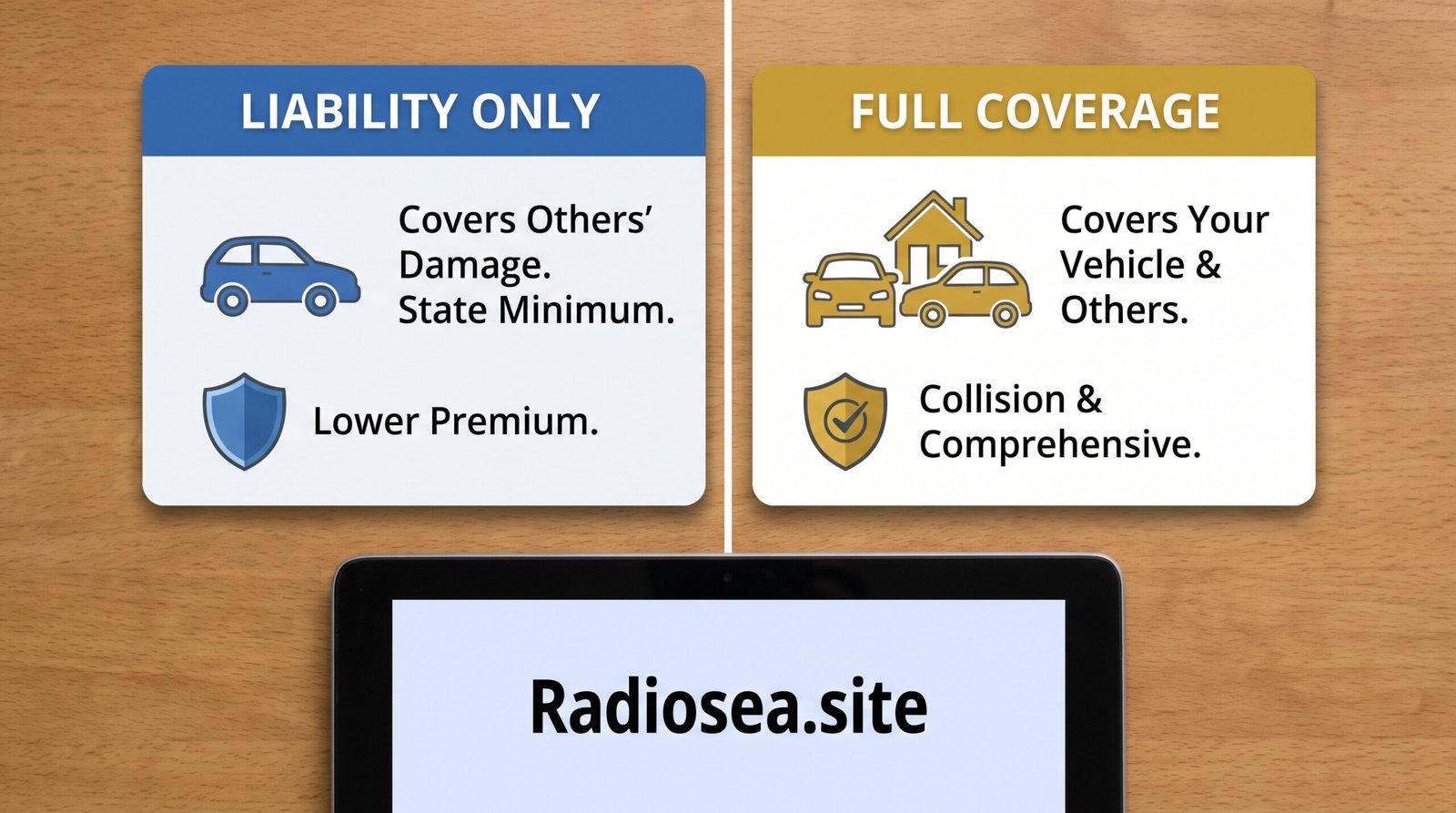
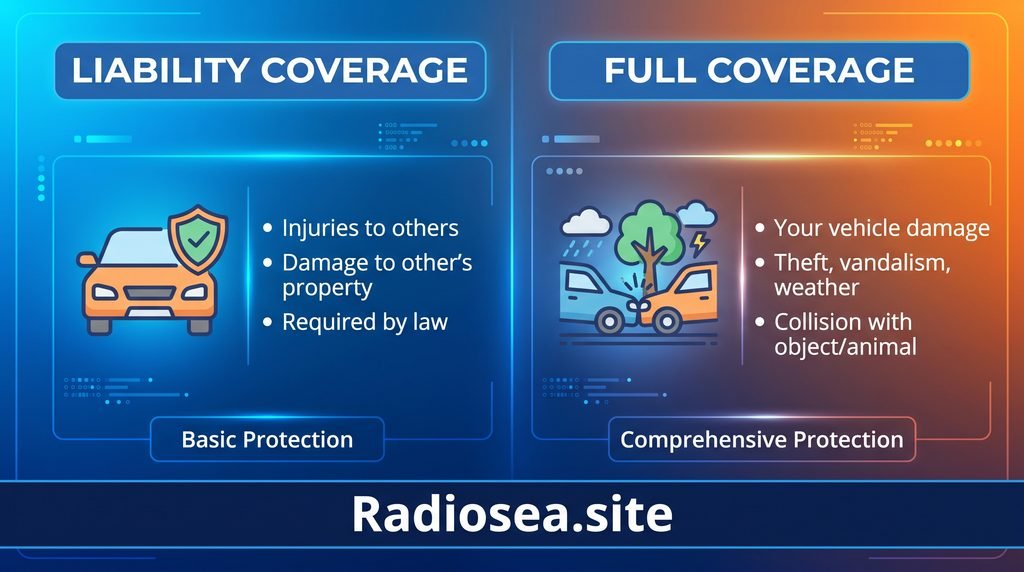
Liability insurance pays for damage you cause to other people. It is the part of car insurance that is legally required in most places, and it usually has two parts:
- Bodily injury liability: medical bills, lost income and legal costs if you injure someone in an accident you cause
- Property damage liability: repairs to the other driver’s car or other property you damage, such as a fence or a building
Liability cover does not pay to repair your own car or treat your own injuries. If you cause an accident with liability only, you pay for your own vehicle repairs yourself. Car Insurance
What full coverage actually means
Full coverage is not an official policy type. It is the everyday name for liability Car Insurance combined with two types of cover for your own car:
- Collision: pays to repair or replace your car after a crash with another vehicle or object, whoever is at fault
- Comprehensive: pays for non-collision damage such as theft, vandalism, fire, flooding, falling objects and hitting an animal
Many full coverage policies also include extras such as uninsured motorist protection, medical payments and rental car reimbursement. Because the term is loose, always read the policy to see exactly what is included.
Full coverage vs liability: side by side
| What you need covered | Liability only | Full coverage |
|---|---|---|
| Other people’s injuries | Yes | Yes |
| Other people’s property | Yes | Yes |
| Your car after a crash you cause | No | Yes (collision) |
| Theft, fire, vandalism, weather | No | Yes (comprehensive) |
| Required by law | Yes, in most places | Only the liability part |
| Required by a lender or lessor | Usually not enough | Usually yes |
| Premium | Lower | Higher |
| Best for | Older, low-value cars | Newer, financed or valuable cars |
Options such as medical payments and uninsured motorist cover vary by region and insurer, so confirm what is available to you.
Which one do you need?
Full coverage is usually the better choice if:
- You are financing or leasing the car, since lenders typically require collision and comprehensive
- The car is fairly new or worth a lot
- You could not afford to repair or replace the car from savings
Liability-only may be enough if:
- The car is old and its value is low
- You own it outright
- You could replace it from savings without hardship
A useful rule of thumb: if the yearly cost of collision and comprehensive is a large share of what the car is worth, the extra cover may no longer be good value. Even then, do not skimp on liability limits, because they protect your assets from claims by others.
Full coverage vs liability FAQ
Does full coverage cover everything?
No. It still has limits, deductibles and exclusions, such as normal wear and tear or intentional damage.
Is full coverage required by law?
In most places only liability cover is required. Collision and comprehensive are usually required only by a lender or leasing company.
Does full coverage pay if the accident is my fault?
Yes. Collision cover pays for your car’s damage regardless of fault, minus your deductible.
Can I switch from full coverage to liability only?
Yes, but check your loan or lease agreement first. If you owe money on the car, you may be required to keep full coverage.
How much more does full coverage cost?
It varies by driver, car and location, so compare quotes for both options to see the exact difference for you.
Conclusion
Liability Car Insurance protects other people from the damage you cause. Full coverage adds protection for your own car. Match your choice to your car’s value, your loan terms and your savings, and always keep liability limits high enough to protect what you own.
Not sure which suits you? Request quotes for both options and compare the price difference.